NICE guideline NG1: Gastro-oesophageal reflux disease in children and young people: diagnosis and management(2015 年發布、2019-10-09 更新;嬰兒溢奶的比例與時程、警訊表、餵食調整、仰睡、單純溢奶不用抑制胃酸藥物) 連結
Rosen R, Vandenplas Y, Singendonk M, et al. Pediatric Gastroesophageal Reflux Clinical Practice Guidelines: Joint Recommendations of NASPGHAN and ESPGHAN. J Pediatr Gastroenterol Nutr. 2018;66(3):516-554(警訊表;沒有警訊、不影響進食與生長時不需要檢查或抑制胃酸;加稠可減少看得到的溢奶) 連結
American Academy of Pediatrics(HealthyChildren.org)— Why Babies Spit Up(2025-01-03 更新;少量多餐、餵食中與餵食後拍嗝、餵完直立至少 20 分鐘) 連結
Leong MM, Chen SC, Hsieh CS, et al. Epidemiological features of infantile hypertrophic pyloric stenosis in Taiwanese children: a nation-wide analysis of cases during 1997-2007. PLoS One. 2011;6(5):e19404(台灣健保資料:每千名活產 0.39 例、男女比 4.3 比 1、平均 43.1 天確診) 連結
Tiao MM, Tsai SS, Kuo HW, Yang CY. Epidemiological features of infantile hypertrophic pyloric stenosis in Taiwan: a national study 1996-2004. J Gastroenterol Hepatol. 2011;26(1):78-81(台灣發生率每千名活產 0.39 例;手術後預後良好) 連結
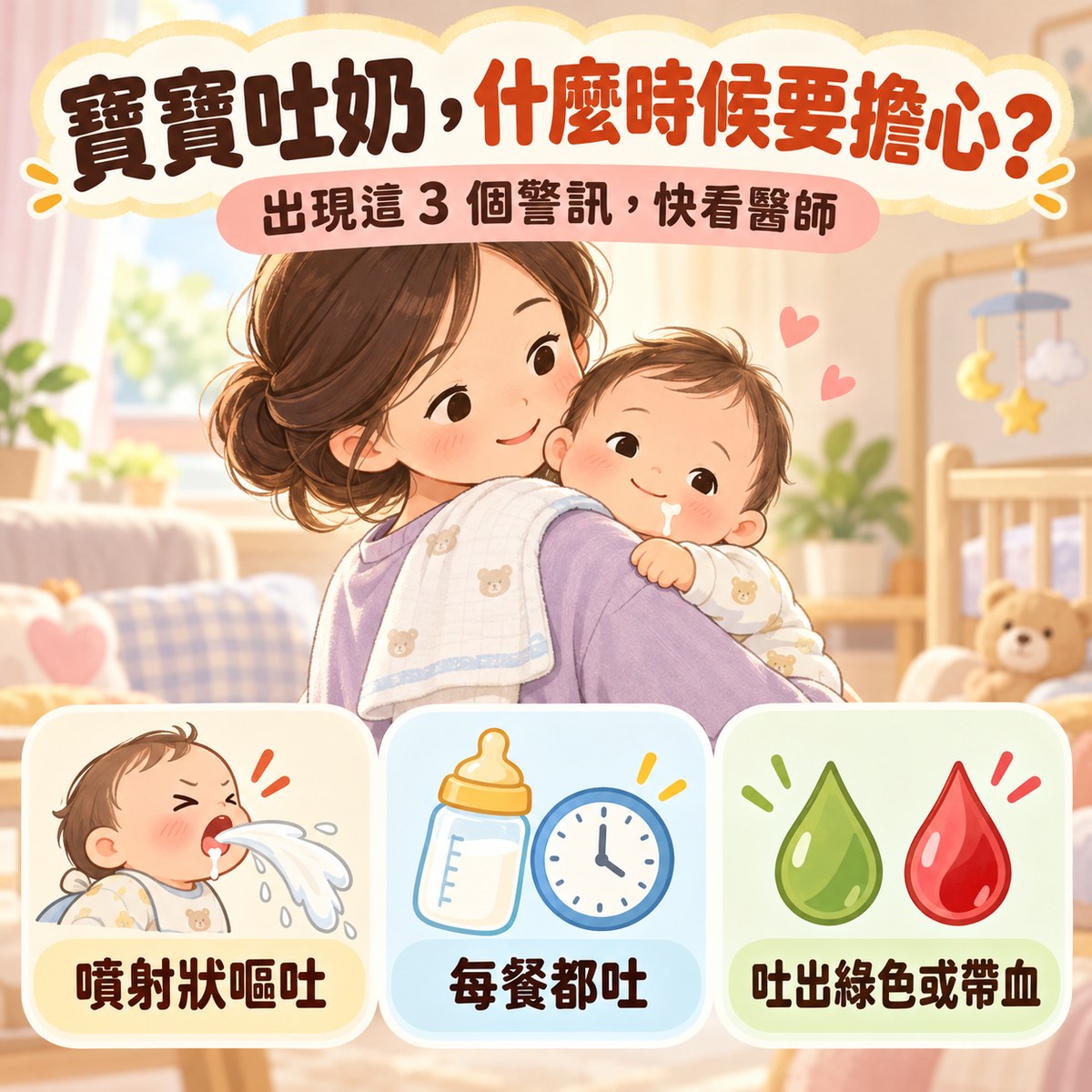
Costa Dias S, Swinson S, Torrão H, et al. Hypertrophic pyloric stenosis: tips and tricks for ultrasound diagnosis. Insights Imaging. 2012;3(3):247-250(多在出生第 2 到 6 週出現;噴射狀、不含膽汁的嘔吐、食慾旺盛;超音波是首選檢查,以幽門肌肉厚度為主要診斷依據) 連結