McDonald LG, Tovey E. The role of water temperature and laundry procedures in reducing house dust mite populations and allergen content of bedding. J Allergy Clin Immunol. 1992;90(4 Pt 1):599-608(55℃ 以上的水溫殺死全部塵蟎;冷水洗不能除去大部分活的塵蟎) 連結
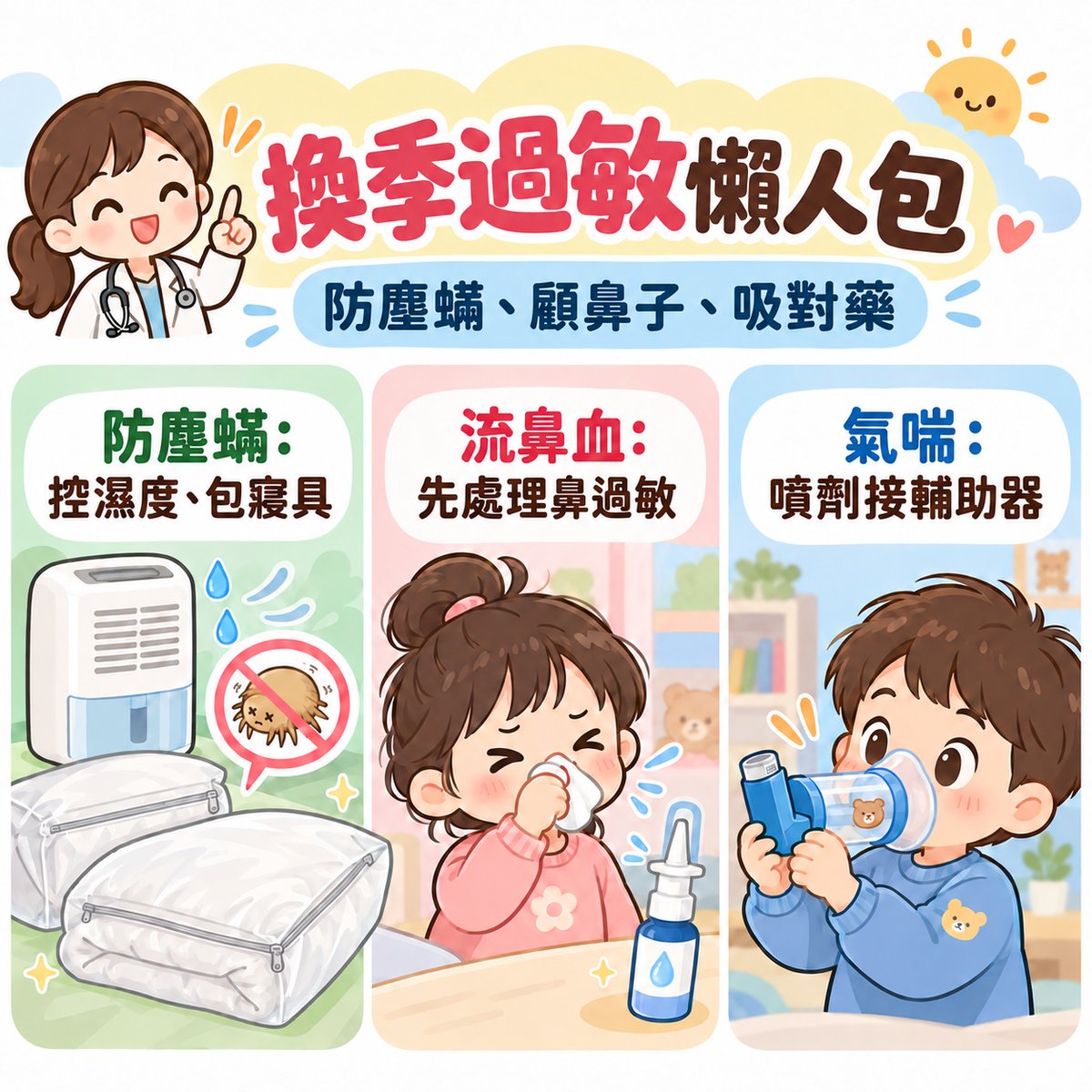
Portnoy J, Miller JD, Williams PB, et al. Environmental assessment and exposure control of dust mites: a practice parameter. Ann Allergy Asthma Immunol. 2013;111(6):465-507(美國過敏氣喘免疫學會等聯合實務參數;塵蟎在 25~30℃、相對濕度 75~80% 最旺盛;家中相對濕度建議維持 35~50%(強建議);每週清洗寢具) 連結
Tunkel DE, Anne S, Payne SC, et al. Clinical Practice Guideline: Nosebleed (Epistaxis). Otolaryngol Head Neck Surg. 2020;162(1_suppl):S1-S38(美國耳鼻喉頭頸外科學會;約 5~10% 鼻出血來自後方;健康兒童的鼻出血多半來自鼻中膈前端,挖鼻子、鼻子發炎結痂會誘發或加重) 連結
Benninger MS. Epistaxis and its relationship to handedness with use of intranasal steroid spray. Ear Nose Throat J. 2008;87(8):463-465(使用鼻用類固醇者流鼻血的那一側,78% 與噴藥的手同側;教導噴藥技巧可能減少流鼻血) 連結
National Asthma Council Australia — Australian Asthma Handbook: Selecting inhalers for children 1–5 years(用定量噴霧劑加吸藥輔助器給藥;適用各年齡兒童;3 歲以下用貼合的面罩,4~5 歲用吹嘴) 連結